Industry Guides
Published on Aug 3, 2026
AI Receptionist vs Answering Service for Plumbers: Which Fits After-Hours and Emergency Calls?

Rexpt Editorial Team
7 min read
A plumbing-specific comparison of human answering services and AI receptionists across after-hours coverage, emergency routing, appointment workflows, call capacity, cost structure, and human escalation.
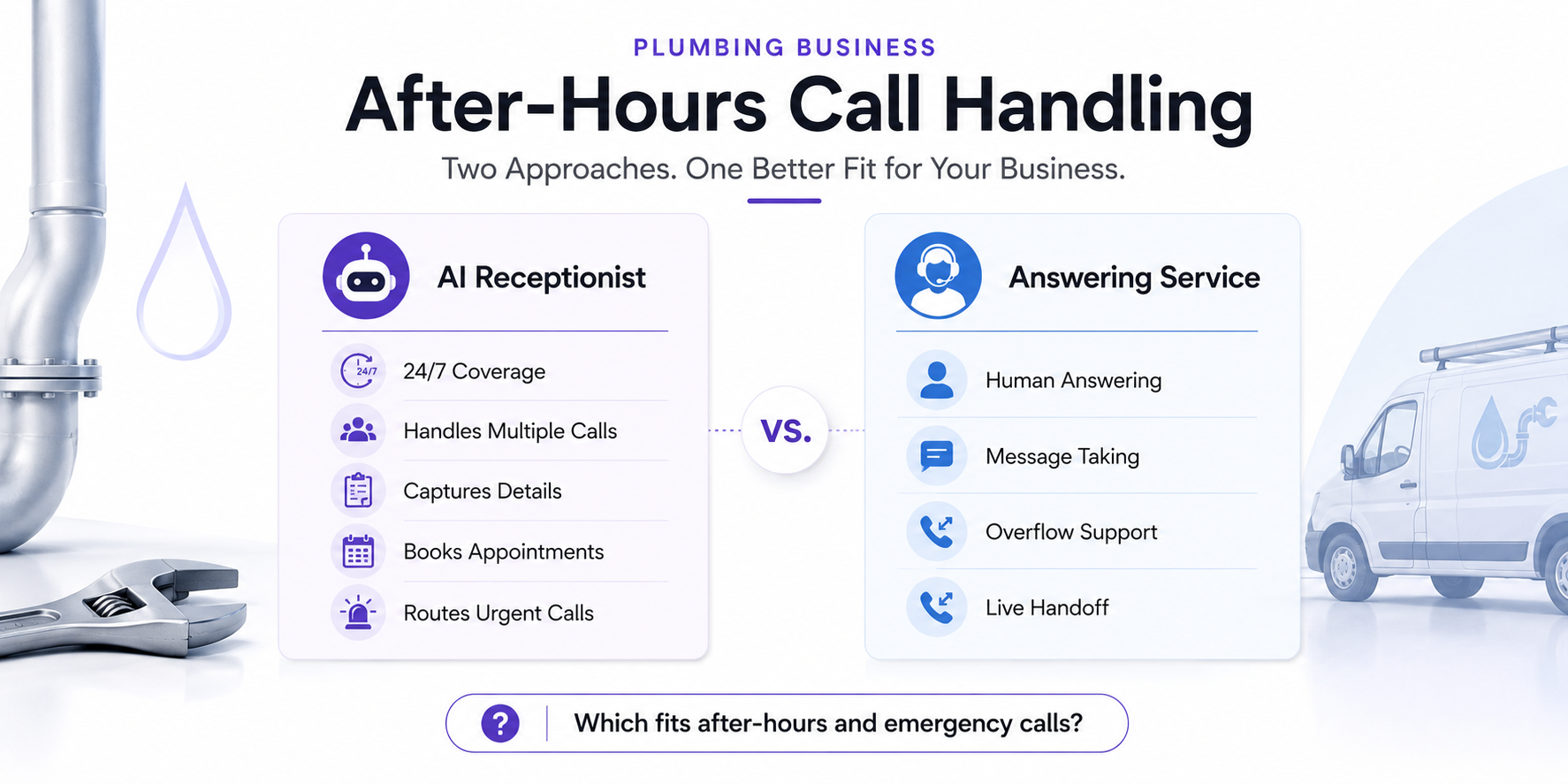
A plumber does not need the phone answered for the sake of answering it. The call has to move somewhere useful: an emergency route, an appointment, a qualified lead, a message for follow-up, or a clear answer to a routine question.
Both human answering services and AI receptionists can support that goal, but they use different operating models. The better choice depends on the type of calls your business receives, how much human judgment you want at the first point of contact, and how much of the intake workflow can be standardized.
What a Human Answering Service Can Do
A traditional answering service uses live agents to answer on behalf of multiple client businesses. Depending on the provider and plan, those agents may take messages, follow custom scripts, transfer urgent calls, schedule appointments, or update connected systems. Capabilities vary significantly, so it is important to evaluate the actual workflow rather than assume every service is only a message-taking operation.
The main advantage is human discretion. A trained person can adapt to an unusual caller, handle emotional nuance, and make judgment calls outside a rigid script. The trade-offs are usually tied to staffing, pricing structure, consistency across agents, and the amount of plumbing-specific context the provider can maintain.
What an AI Receptionist Can Do
An AI receptionist applies configured business rules to every call. It can collect caller and job details, answer approved questions, check service areas, qualify the request, support appointment booking, route urgent calls, and create a structured summary for follow-up. It can also handle multiple calls at the same time, which is useful when weather or local events create sudden call spikes.
Its strength is repeatability. The same intake questions, routing rules, and business information can be applied across calls. Its limitation is equally important: unusual situations, negotiation, empathy-heavy conversations, or cases that require human judgment need a clear escalation path.
AI Receptionist vs Answering Service for Plumbers: Side by Side
| Factor | Human Answering Service | AI Receptionist |
|---|---|---|
| First-line handling | Live human agent | Configured AI voice agent |
| Emergency routing | Provider- and script-dependent | Rule-based routing, transfer, or alert based on configuration |
| Appointment booking | Available with some providers/plans | Can book when calendar integration and rules are configured |
| Multiple simultaneous calls | Limited by staffed agent capacity | Can handle concurrent calls without a single-agent bottleneck |
| Plumbing-specific intake | Requires training and account instructions | Configured once and applied consistently |
| Unusual / emotional calls | Strong human adaptability | Best handled through escalation when judgment or empathy is required |
| Pricing model | Often package, per-call, per-minute, or hybrid | Usually subscription plus included or usage-based minutes |
| Call records | Messages and notes vary by provider | Transcripts, summaries, and CRM records can be generated automatically |
| Optimization | Update scripts and agent instructions | Update knowledge, prompts, routing rules, calendars, and integrations |
The Plumbing-Specific Question: What Happens to an Urgent Call?
The comparison becomes clearer when you follow one call from start to finish. A homeowner calls after hours with an active plumbing issue. The system should capture the address, understand the reason for the call, decide whether the business’s emergency criteria are met, and then move the call to the correct on-call path.
A strong human answering service can do this when its agents have clear plumbing-specific instructions and a reliable transfer process. A configured AI receptionist can do it by applying the same intake and routing logic automatically. The practical buying question is not “human or AI?” in the abstract. It is “which model can execute our exact emergency policy consistently at the call volumes we receive?”
Cost: Compare the Operating Model, Not Just the Headline Price
Answering-service pricing varies by provider. Some charge by minute, some by call, and others bundle usage into monthly packages. That can be appropriate for businesses that want human coverage, but it also means the bill can change as call volume changes.
AI receptionist pricing also varies by included minutes, features, integrations, and overage rates. Rexpt’s current Starter plan is listed at $119 per month on monthly billing, with a $99-per-month equivalent on annual billing and includes 300 minutes. Because pricing and plan details can change, the live pricing page should be treated as the source of truth at publication time.
Review current Rexpt plans on the Rexpt pricing page.
The useful calculation is total operating cost: base fee, usage, setup, integration requirements, after-hours coverage, overflow capacity, and staff time spent on callbacks or manual data entry. A low headline rate can become expensive if the workflow still creates missed handoffs or repetitive work.
When a Human Answering Service May Be the Better Fit
- Your callers regularly need empathy, negotiation, or judgment that cannot be reduced to a repeatable intake workflow.
- Your business deliberately wants a human-first brand experience on every call and accepts the associated staffing model and cost.
- A high percentage of calls are unusual commercial, insurance, property-management, or account situations that require flexible conversation.
- You already have a provider that integrates deeply with your dispatch process and consistently meets your response requirements.
When an AI Receptionist May Be the Better Fit
- You need continuous coverage for nights, weekends, overflow, or periods when technicians cannot answer.
- Most calls follow repeatable patterns such as new-job intake, service-area checks, appointment requests, FAQs, and emergency escalation.
- You need multiple callers handled at the same time during weather events or seasonal peaks.
- You want structured summaries, lead data, and call records without relying on manual message relay.
- You want to reduce unnecessary technician interruptions while keeping a direct human route for genuine emergencies and exceptions.
A Hybrid Model Is Also Valid
The choice does not have to be all-or-nothing. A plumbing company can use AI for routine intake, overflow, and after-hours qualification while preserving a live path for selected customers or exceptional calls. The strongest architecture is the one that makes the handoff explicit rather than pretending every conversation belongs in the same channel.
Questions to Ask Before You Buy
- Can the service use our exact emergency definitions and escalation contacts?
- Can it distinguish routine booking requests from calls that require immediate attention?
- Can it book into the calendar or dispatch system we actually use?
- What happens when the first transfer or on-call contact does not answer?
- How does the service behave when several calls arrive at once?
- What call records, transcripts, summaries, or CRM updates will our team receive?
- What is the full monthly cost at our normal and peak call volumes?
- Where is the human escalation path when the conversation falls outside the configured workflow?
For a broader category comparison, see Best Phone Answering Services for Plumbers Compared.
For the cost of the alternative staffing model, see How Much Does a Receptionist Cost for a Plumbing Business?
The Right Choice Depends on the Calls You Need Covered
There is no universal winner between a human answering service and an AI receptionist.
A human answering service may be the better fit when callers regularly need judgment, empathy, negotiation, or flexibility outside a predictable workflow.
An AI receptionist may make more sense when a large share of calls follow repeatable patterns—such as new-job intake, service-area questions, appointment requests, after-hours qualification, and urgent-call routing.
For many plumbing businesses, a hybrid approach can also work well: automate the routine front-desk workload while keeping a clear path to a person when the situation requires human involvement.
The most useful way to compare the options is not by headline features alone. Test the actual calls your plumbing business receives: a routine booking request, an after-hours enquiry, an urgent call, and a failed transfer. The right system is the one that consistently gives each caller a clear next step without creating unnecessary interruptions for the team.
Mike by Rexpt is built around these plumbing-specific call workflows, including lead and job-detail capture, appointment booking, urgent-call routing, and human escalation where required.
See how Mike handles plumbing calls and evaluate the workflow against the way your business already operates.
Frequently Asked Questions
What is the biggest difference between an AI receptionist and an answering service for plumbers?

A human answering service relies on live agents and human judgment. An AI receptionist relies on configured rules, business knowledge, and integrations. Both can be useful; the right choice depends on the complexity of your calls, desired human involvement, and operational workflow.
Can a human answering service book plumbing appointments?

Some can. Appointment booking, transfers, CRM updates, and custom intake depend on the provider and plan. Confirm the exact workflow rather than assuming the service is limited to message-taking.
Can an AI receptionist handle after-hours emergencies?
It can identify and route calls according to the emergency rules you configure, capture the required details, and trigger the approved transfer or notification path. A human escalation route should remain available for exceptional or safety-sensitive situations.
Which option handles call spikes better?
AI systems can handle concurrent calls without relying on one agent per conversation. Human answering services can also scale through larger agent pools, but capacity depends on staffing and queue conditions. Ask both providers how they handle sudden high-volume events.
Is an AI receptionist always cheaper than an answering service?
Not necessarily. Cost depends on call volume, included minutes, provider pricing, integrations, and the amount of staff time each model saves. Compare the total operating cost at normal and peak usage rather than using a single headline price.
On this page
- What a Human Answering Service Can Do
- What an AI Receptionist Can Do
- AI Receptionist vs Answering Service for Plumbers: Side by Side
- The Plumbing-Specific Question: What Happens to an Urgent Call?
- Cost: Compare the Operating Model, Not Just the Headline Price
- When a Human Answering Service May Be the Better Fit
- When an AI Receptionist May Be the Better Fit
- A Hybrid Model Is Also Valid
- Questions to Ask Before You Buy
- The Right Choice Depends on the Calls You Need Covered
- Frequently Asked Questions
Stop missing
customer calls.
Rexpt answers calls, qualifies leads, and books appointments 24/7.
Related Articles
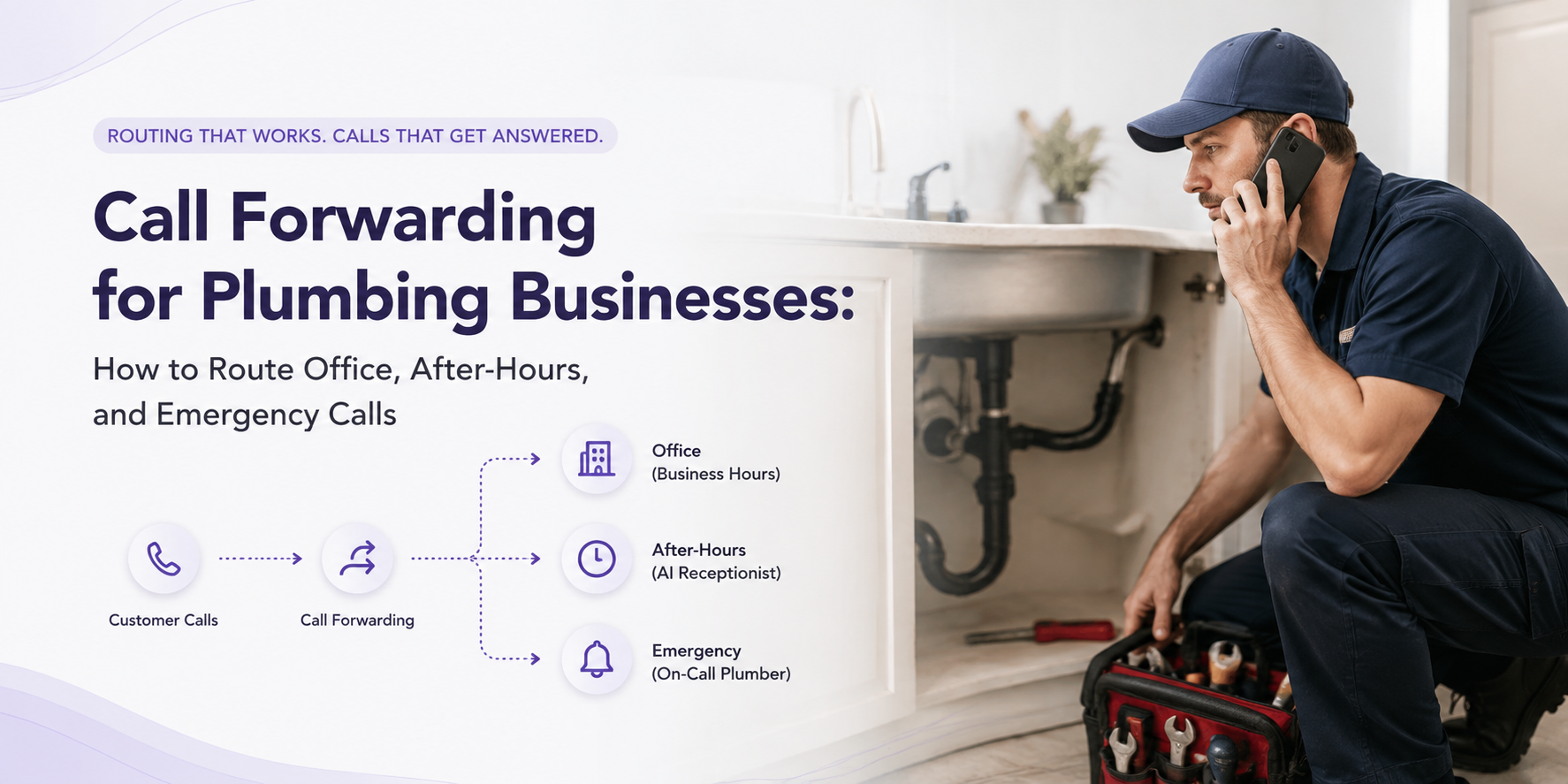
Call Forwarding for Plumbing Businesses: How to Route Office, After-Hours, and Emergency Calls

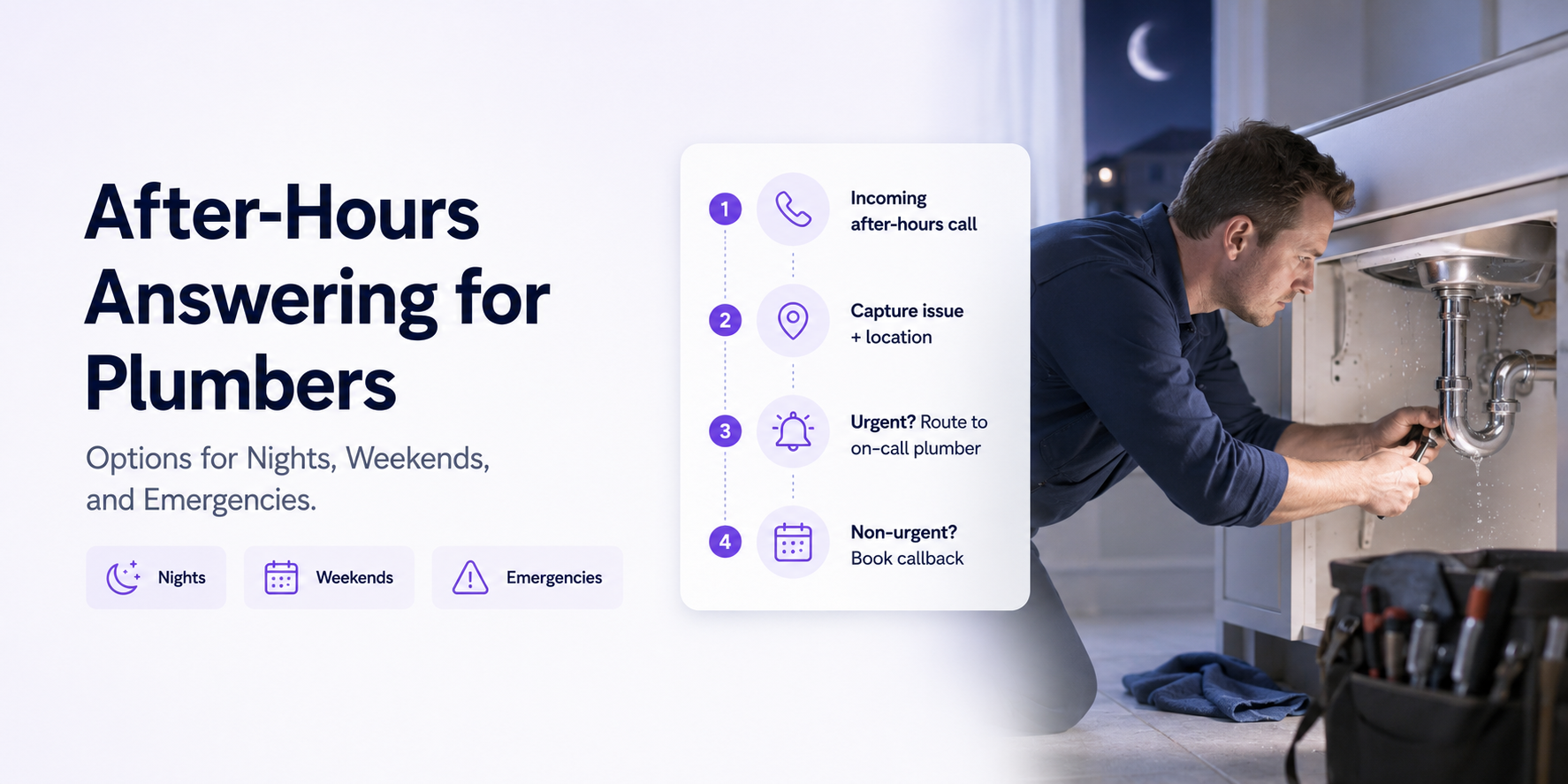
After-Hours Answering for Plumbers: Options for Nights, Weekends, and Emergencies
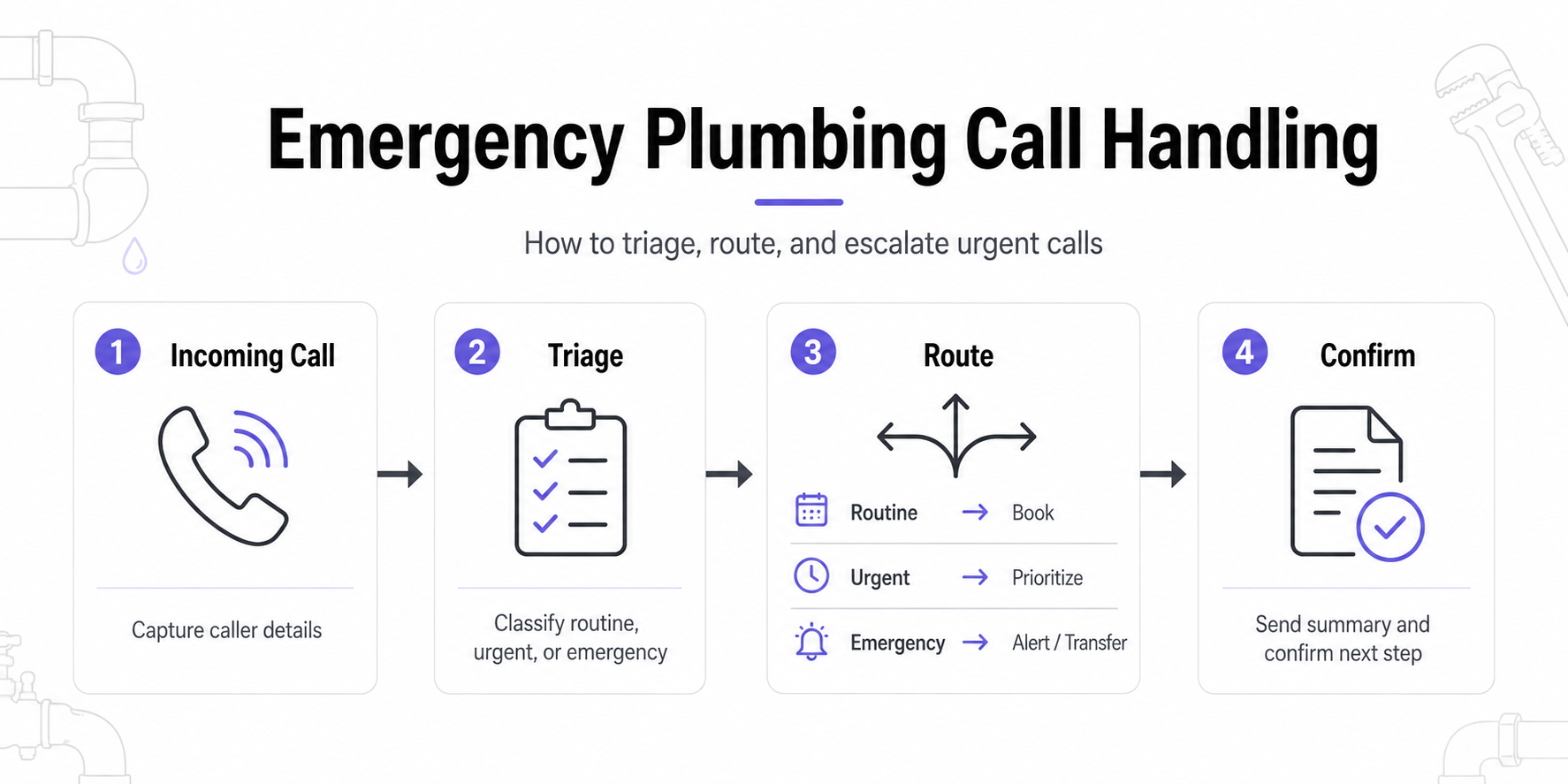
Emergency Plumbing Call Handling: How to Triage, Route, and Escalate Urgent Calls