Industry Guides
Published on Aug 10, 2026
After-Hours Answering for Plumbers: Options for Nights, Weekends, and Emergencies

Rexpt Editorial Team
8 min read
A practical comparison of voicemail, on-call phones, call forwarding, human answering services, AI receptionists, and hybrid coverage for nights, weekends, holidays, and overflow.
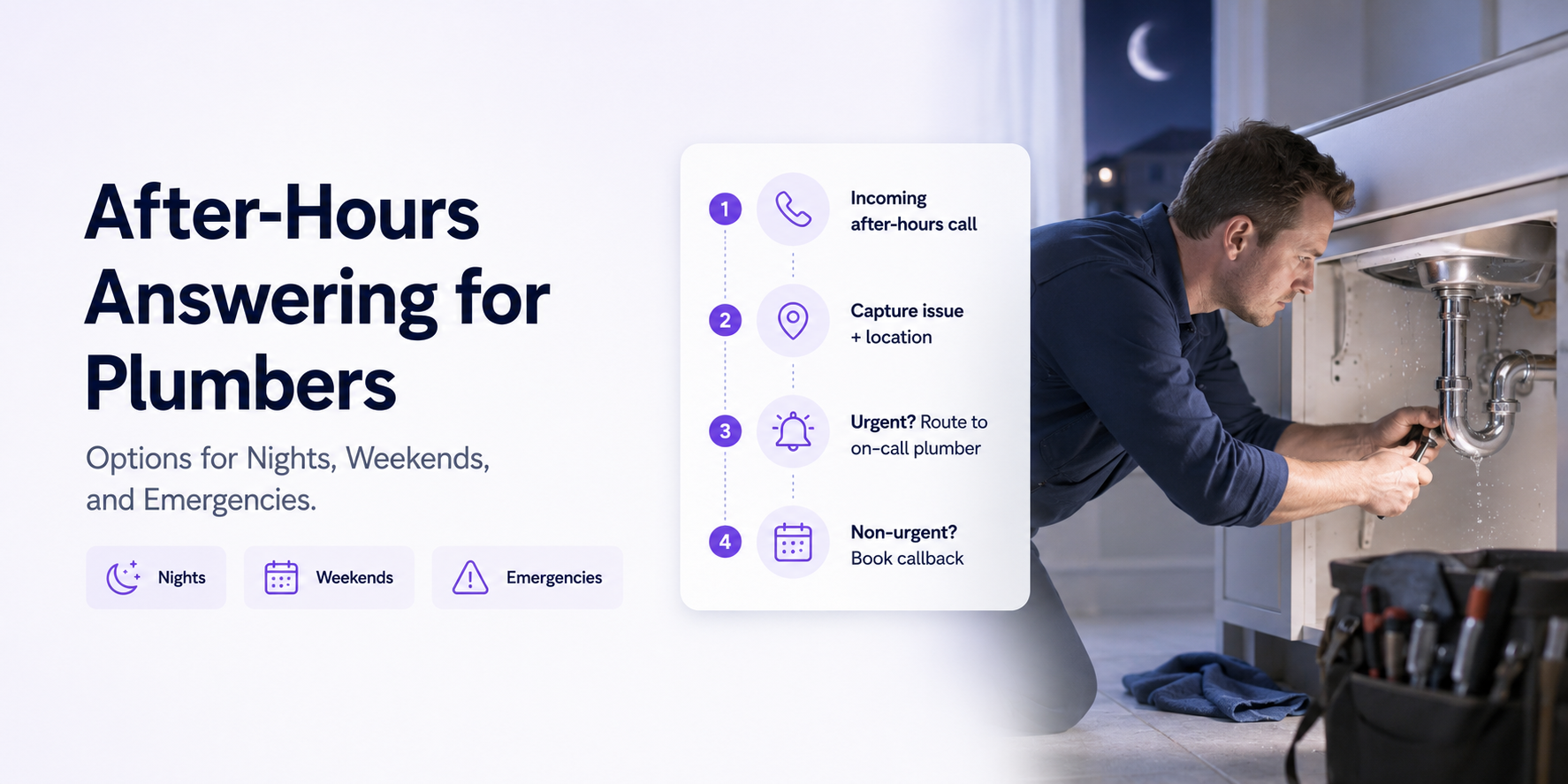
A plumbing business can have excellent technicians, strong local rankings, and a full daytime schedule and still have a weak after-hours process. The gap appears when the office closes, the owner is on a job, the on-call technician is asleep, or several callers arrive at the same time.
After-hours answering is not about expecting one employee to cover a 168-hour week. It is about designing coverage for the periods when your normal front desk is unavailable. The right setup depends on call volume, emergency policy, staffing, budget, and how much of the workflow can be standardized.
First, Define Your After-Hours Policy
Before choosing technology or a service provider, document what should happen outside normal office hours. A system cannot route correctly if the business has not decided what “correct” means.
- Coverage hours: evenings, overnight, weekends, holidays, lunch, or overflow only.
- Emergency criteria: which situations justify immediate escalation, and which can wait until the next open slot.
- On-call contacts: primary and backup numbers, rotation rules, and what happens if neither answer.
- Booking rules: which services can be booked automatically, and which require manual confirmation.
- Service-area rules: locations you accept after hours and any different emergency coverage boundaries.
- Customer promise: what the receptionist may say about response time, arrival time, pricing, and callbacks.
Five Ways Plumbing Businesses Cover After-Hours Calls
1. Voicemail and Morning Callback
This is the simplest option. The business closes, calls go to voicemail, and staff return messages later. It costs little to operate, but it provides no live triage, no immediate booking, and no active emergency routing. It is most suitable when true after-hours demand is low and the business does not market emergency availability.
2. Owner or Technician On-Call Phone
Calls are forwarded to an owner or rotating technician. This preserves direct human control and can work well for low call volume. The downside is interruption: routine questions, spam, price shoppers, and genuine emergencies all compete for the same person. A rotation can help, but the business still needs a fallback when the on-call person cannot answer.
3. Call Forwarding with Conditional Rules
Conditional forwarding lets the office phone ring normally and sends unanswered, busy, or scheduled after-hours calls to another destination. That destination could be a technician, an answering service, or an AI receptionist. Forwarding is a routing layer, not a complete answering strategy, but it is often the cleanest way to preserve the business’s existing public phone number.
4. Human Answering Service
A live answering service can give callers a human interaction outside office hours. Depending on the provider, agents may take messages, transfer urgent calls, follow custom scripts, or book appointments. The main considerations are pricing model, plumbing-specific training, queue capacity, integration depth, and how quickly urgent calls reach the on-call person.
5. AI Receptionist or Hybrid Coverage
An AI receptionist can handle routine intake, service-area questions, booking, lead capture, and emergency routing according to configured rules. It can also handle multiple calls at the same time. A hybrid design keeps a human path for calls that require judgment, empathy, or an exception to the normal process.
A Practical After-Hours Call Flow
- Answer with the business name and establish that the caller has reached an active service line.
- Capture the caller’s name, callback number, service address, and reason for the call.
- Classify the request using the plumbing company’s approved routine, urgent, and emergency rules.
- For routine work, answer approved questions or book the next eligible appointment.
- For an emergency, route or alert the on-call contact using the approved transfer, SMS, or dispatch process.
- If the primary route fails, execute the fallback instead of sending the caller into an unmonitored voicemail box.
- Create a call summary so the daytime team can see what happened, what was promised, and what still needs follow-up.
Protect the On-Call Team from Unnecessary Interruptions
After-hours coverage fails when every caller is treated as an emergency. The on-call technician should not be the first-line receptionist for routine drain cleaning, future estimates, warranty questions, or spam. A triage layer - human or AI - should filter those conversations and reserve immediate interruptions for calls that match the business’s emergency policy.
This is also why “just forward the phone to the technician” is not a complete long-term system. Forwarding solves the destination problem. It does not solve qualification, booking, documentation, or fallback.
How to Choose the Right Coverage Model
| Option | Best Fit | Main Limitation |
|---|---|---|
| Voicemail | Low after-hours demand | No live intake or escalation |
| On-call phone | Low volume + direct owner control | High interruption load; single-person dependency |
| Call forwarding | Routing existing number to another destination | Needs an answering destination and fallback |
| Human answering service | Human-first experience and flexible judgment | Cost and capacity depend on provider/staffing |
| AI receptionist | Repeatable intake, overflow, booking, and concurrent calls | Requires accurate configuration and escalation rules |
| Hybrid | Businesses that want automation plus human exceptions | More moving parts to configure and test |
Test the System Before You Rely on It
Run test calls after normal closing time, not only at 2 PM from the office. Test a routine request, an urgent request, a call from outside the service area, a busy on-call number, and simultaneous calls. Confirm that the caller receives the right next step and that the team receives the expected alert, calendar entry, or summary.
Track simple operating metrics: calls received after hours, calls answered, emergency escalations, appointments created, failed transfers, and calls that needed human correction. Those numbers show whether the system is reducing friction or simply moving it somewhere else.
For the emergency workflow itself, read Emergency Plumbing Call Handling.
For the broader category landscape, see Best Phone Answering Services for Plumbers Compared.
Build the Coverage Model Around Your Actual After-Hours Calls
The best after-hours setup is not necessarily the one with the most technology or the most people. It is the one that matches the calls your plumbing business actually receives.
If after-hours demand is low, a simple on-call or forwarding setup may be enough. If routine calls, appointment requests, and urgent enquiries regularly arrive when staff are unavailable, adding an answering service, AI receptionist, or hybrid layer can create more consistent coverage.
What matters most is having clear rules: which calls can wait, which can be booked, which require immediate escalation, who receives them, and what happens if the first handoff fails.
Then test the system under the conditions that actually matter—after closing time, during busy periods, and with both routine and urgent scenarios.
For plumbing businesses that want to automate repeatable intake while keeping a clear path to the on-call team, Mike by Rexpt is designed around those workflows.
See how Mike handles after-hours plumbing calls and compare the workflow with the way your business currently handles nights, weekends, and overflow.
Frequently Asked Questions
What is the simplest after-hours answering setup for a small plumbing business?

For very low after-hours volume, an on-call phone or conditional call forwarding may be enough. As volume grows, adding a human answering service, AI receptionist, or hybrid layer can reduce interruptions and provide more consistent intake.
Should plumbers answer every call after hours?

The business should decide what service level it intends to offer. If it markets emergency or 24/7 availability, the call workflow should support that promise. Routine calls can often be scheduled or recorded without waking an on-call technician.
Can I keep my existing plumbing business phone number?
Usually yes. Call forwarding can route calls from the existing public number to another destination, including an answering service or AI receptionist. Exact forwarding options depend on the carrier or VoIP provider.
How do I keep after-hours calls from burning out technicians?
Use a triage layer that filters routine requests, spam, and non-urgent questions before the on-call technician is interrupted. Define primary and backup escalation paths so the technician is not also responsible for managing the phone system.
What should happen if an after-hours transfer fails?
A tested fallback should run automatically or immediately: a backup on-call contact, urgent notification, or another approved response. The caller should not be left without a clear next step simply because one transfer was unanswered.
On this page
- First, Define Your After-Hours Policy
- Five Ways Plumbing Businesses Cover After-Hours Calls
- A Practical After-Hours Call Flow
- Protect the On-Call Team from Unnecessary Interruptions
- How to Choose the Right Coverage Model
- Test the System Before You Rely on It
- Build the Coverage Model Around Your Actual After-Hours Calls
- Frequently Asked Questions
Stop missing
customer calls.
Rexpt answers calls, qualifies leads, and books appointments 24/7.
Related Articles
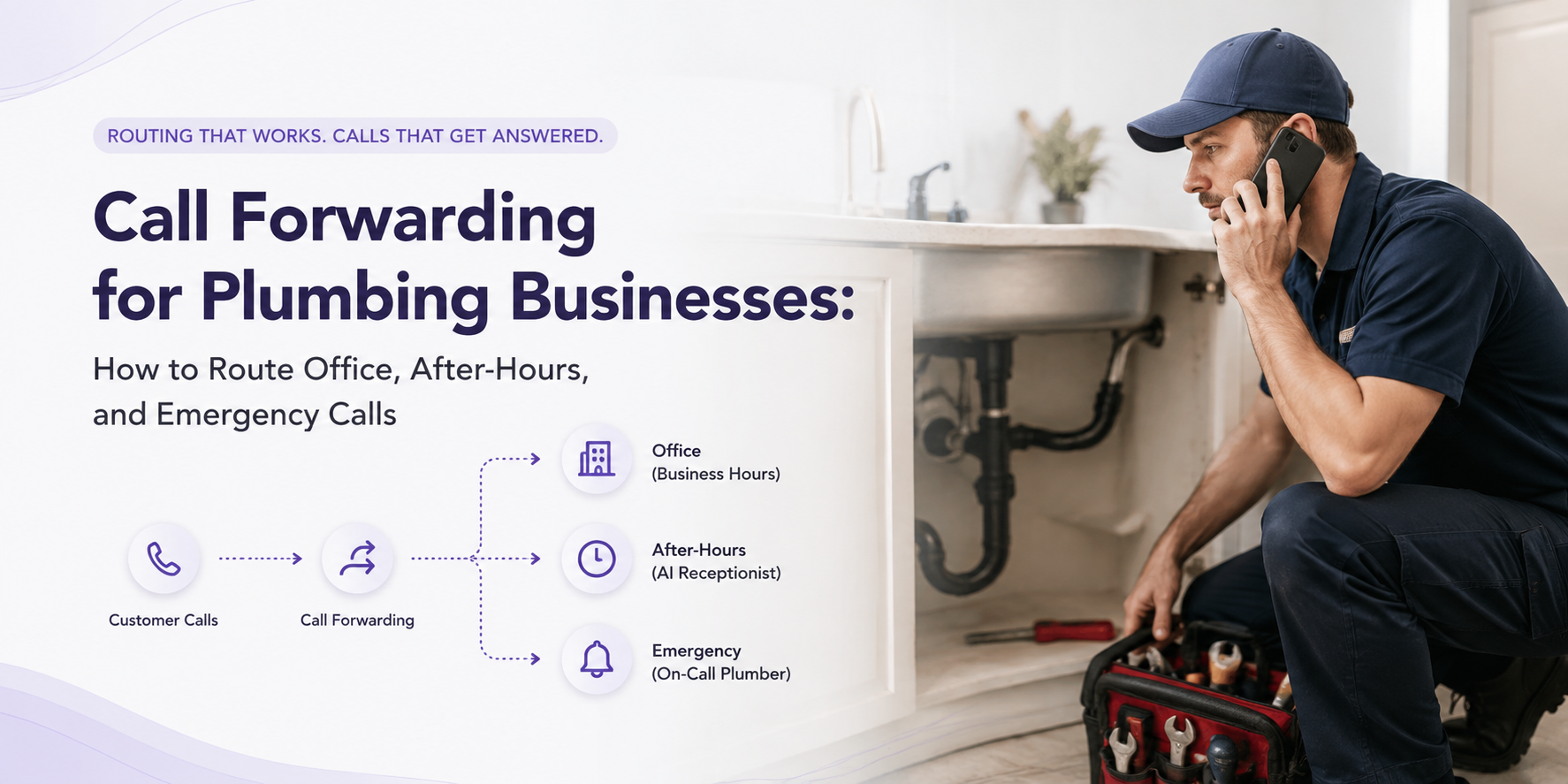
Call Forwarding for Plumbing Businesses: How to Route Office, After-Hours, and Emergency Calls

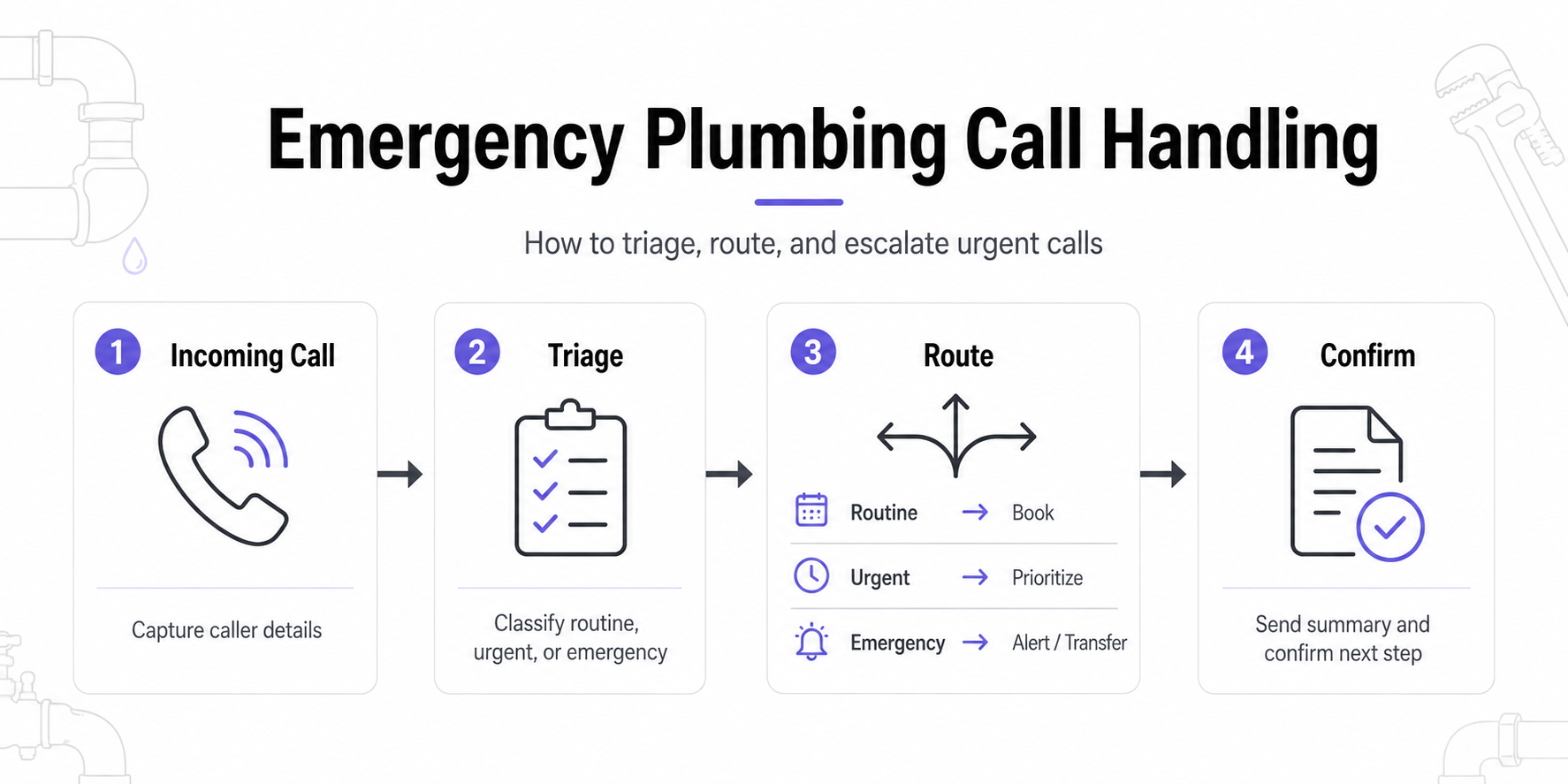
Emergency Plumbing Call Handling: How to Triage, Route, and Escalate Urgent Calls
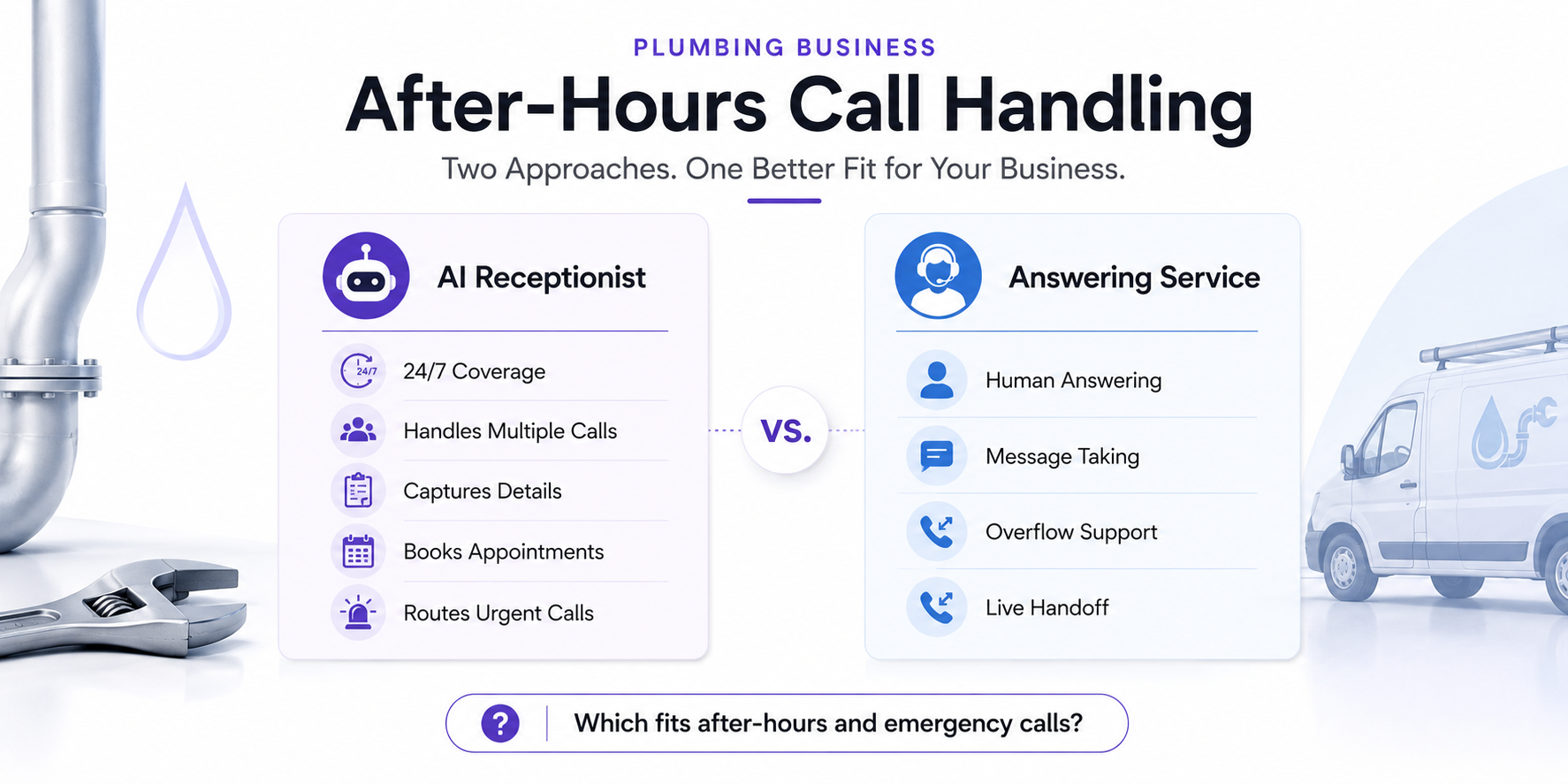
AI Receptionist vs Answering Service for Plumbers: Which Fits After-Hours and Emergency Calls?