Industry Guides
Published on Nov 18, 2026
HVAC Maintenance Agreement Calls: How to Handle Plan Questions, Renewals, and Tune-Up Bookings

Rexpt Editorial Team
10 min read
HVAC maintenance agreements bring recurring customer calls about plan coverage, renewals, and seasonal tune-ups. Learn how HVAC companies can organize these enquiries, manage appointment requests, and improve customer call handling.
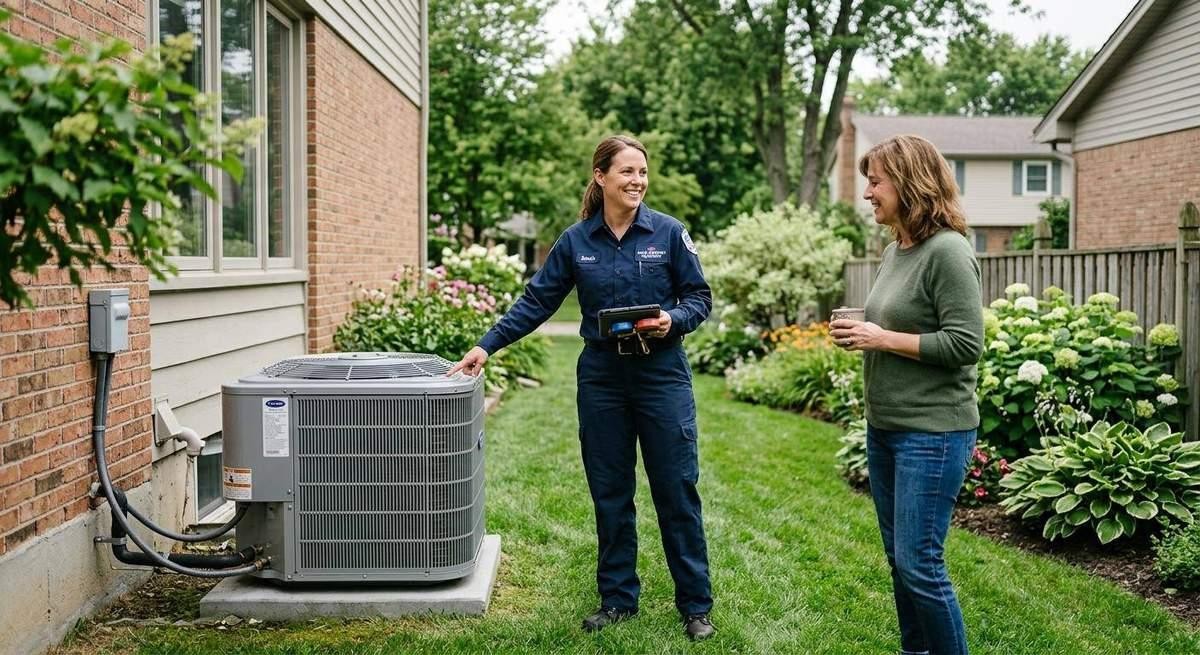
HVAC maintenance agreements help heating and cooling companies build ongoing relationships with customers. Instead of waiting for a system to break down, homeowners can arrange routine maintenance visits and keep their heating and cooling equipment on a planned service schedule.
But managing these agreements involves more than sending reminders. Customers call with questions about plan coverage, renewal dates, appointment availability, seasonal tune-ups, and service requests. During busy periods, handling every call promptly can become difficult for a small HVAC team.
A structured phone-handling process helps HVAC businesses manage these conversations, capture important details, and make it easier for customers to take the next step.
In this guide, we explain how HVAC companies can organize maintenance agreement enquiries, handle renewal questions, schedule tune-up appointments, and use an AI receptionist to support everyday call management.
What Is an HVAC Maintenance Agreement?
An HVAC maintenance agreement is a service arrangement between an HVAC company and a customer for planned maintenance of heating or cooling equipment.
Depending on the company's offering, an agreement may include scheduled inspections, seasonal tune-ups, priority service options, or other defined benefits.
The exact services, frequency, pricing, and exclusions depend on the provider's contract.
For HVAC businesses, these agreements create recurring customer interactions throughout the year. Customers may call to:
- Ask what their maintenance plan includes.
- Confirm when their next service is due.
- Check whether an agreement is still active.
- Ask about renewal options.
- Schedule a seasonal heating or cooling tune-up.
- Request help understanding a service charge.
- Change or cancel an upcoming appointment.
Each call needs an appropriate response. Some questions can be answered using approved company information, while others may require a technician, office administrator, or billing team member.
Why Maintenance Agreement Calls Can Become Difficult to Manage
Maintenance customers often contact HVAC companies at predictable times of the year. For example, homeowners may start calling before summer to arrange air conditioning maintenance or before winter to prepare their heating systems.
This seasonal demand can put pressure on a small office team.
1. Customers Call at the Same Time
When temperatures change, many customers want to schedule service around the same period. A limited number of office staff may struggle to answer every incoming call while managing existing appointments.
2. Technicians Are Working in the Field
HVAC technicians spend much of their working day travelling between properties, inspecting equipment, and completing service jobs. They may not be available to answer routine customer questions.
3. Renewal Questions Require Accurate Information
A customer asking about a renewal may need details about their current agreement, pricing, included services, or renewal date. If the information is not readily available, the caller may need a follow-up from the office team.
4. Scheduling Requires Coordination
A customer may be ready to book a tune-up, but the company still needs to consider service areas, appointment types, technician availability, and existing commitments.
Without a clear process, calls can lead to unnecessary back-and-forth communication.
1. Create a Clear Process for Maintenance Plan Questions
Not every customer needs to speak with a technician. Many maintenance agreement calls involve straightforward questions about the company's service plans.
HVAC businesses can prepare an approved knowledge base containing information such as:
- Available maintenance plans.
- Services included in each plan.
- General maintenance visit procedures.
- Business hours and service areas.
- Renewal enquiry procedures.
- How customers can request a maintenance appointment.
- Contact details for billing or account questions.
This information should be accurate and regularly updated.
For example, if a customer asks whether a maintenance plan includes a particular repair, the receptionist should only provide an answer when the company's approved documentation clearly confirms it.
If the answer depends on the customer's individual agreement, the request should be passed to an employee who can review the account.
The goal is not to answer every question automatically. It is to make sure routine enquiries receive consistent information and more complicated requests reach the right person.
2. Organize Maintenance Agreement Renewal Enquiries
Renewal conversations are an important part of maintaining long-term customer relationships.
Customers may call because their agreement is approaching its renewal date, they want to understand the next billing period, or they are considering continuing their maintenance coverage.
HVAC businesses should establish a consistent process for these calls.
A useful renewal enquiry workflow can include:
Step 1: Identify the caller
Collect the customer's name and preferred contact details.
Step 2: Understand the request
Determine whether the customer wants to ask about renewal, check the status of an agreement, discuss pricing, or speak with someone about changing their plan.
Step 3: Capture relevant information
Record any available agreement reference, equipment type, property address, and the customer's specific question.
Step 4: Route account-specific questions
Questions involving individual contract terms, billing adjustments, cancellations, or renewal approval should be directed to the appropriate staff member.
Step 5: Confirm the next step
Let the customer know whether the team will call back, review the agreement, or provide further information.
An organized process prevents renewal enquiries from becoming incomplete messages that staff must investigate later.
3. Make Seasonal Tune-Up Booking Easier
Seasonal tune-ups are a common reason customers contact HVAC companies.
For example:
- Spring and early summer: Customers may request air conditioning maintenance before warmer weather arrives.
- Autumn: Homeowners may want heating systems checked before colder weather.
- Before extreme temperatures: Customers may want to confirm that a planned maintenance visit is scheduled.
The booking process should collect enough information to help the office team arrange the correct appointment.
Useful details include:
- Customer name and phone number.
- Service address.
- Type of equipment, if known.
- Requested maintenance service.
- Preferred appointment date or time.
- Whether the customer has an existing maintenance agreement.
If appointment booking is enabled, an AI receptionist can check connected calendar availability, offer valid time slots, and create a booking according to configured scheduling rules.
The business should also define which appointment types can be booked automatically and which require staff approval.
For example, a routine tune-up may follow a standard booking workflow, while a complicated equipment complaint may need a technician or dispatcher to review the request first.
4. Separate Routine Maintenance Calls from Urgent Service Requests
One important part of HVAC call management is understanding the difference between a routine maintenance enquiry and a potentially urgent service issue.
A customer calling to arrange a seasonal tune-up generally follows a different process from someone reporting that their heating or cooling system has stopped working.
HVAC companies should define call categories such as:
| Call type | Recommended next step |
|---|---|
| Maintenance plan question | Provide approved information |
| Renewal enquiry | Capture details and route to the office team |
| Routine tune-up request | Follow the configured booking process |
| Billing question | Route to the billing or account team |
| Equipment not working | Capture the issue and follow service escalation rules |
| Caller requests a person | Transfer according to business rules |
The business should establish clear escalation instructions for urgent situations. An AI receptionist should not diagnose HVAC equipment problems or make promises about technician arrival times without verified information.
5. Use an AI Receptionist to Support Maintenance Calls
An AI receptionist can help HVAC businesses manage incoming calls when office staff are busy or unavailable.
Rather than treating every call as a message-taking exercise, a configured AI receptionist can follow a structured workflow based on the company's information and operating rules.
For maintenance agreement calls, this may include:
Answering incoming calls: Provide a consistent greeting and identify why the customer is calling.
Handling approved FAQs: Answer routine questions using the business information supplied to the AI.
Capturing customer details: Collect names, contact information, service addresses, and the reason for the call.
Supporting appointment booking: When configured, check connected calendar availability and book approved appointment types.
Routing calls: Transfer account-specific or more complex requests to the appropriate person based on configured rules.
After-hours call handling: Capture maintenance enquiries and follow the business's configured callback, booking, or escalation process.
The important point is that an AI receptionist supports the company's call-handling process. It does not replace the people responsible for contract decisions, technical assessments, or customer account management.
How Rexpt AI Can Help HVAC Companies Manage These Calls
Rexpt is an AI receptionist designed to answer incoming business calls, collect caller information, support appointment booking, and route calls according to configured business rules.
For HVAC companies, this can be useful when customers call about maintenance services, seasonal appointments, or general service enquiries.
With an appropriate setup, Rexpt can support workflows such as:
- Answering incoming maintenance enquiries.
- Collecting customer and service details.
- Providing approved answers about maintenance services.
- Supporting tune-up appointment booking through a connected calendar.
- Routing renewal, billing, or account-specific questions to staff.
- Following configured after-hours call-handling instructions.
For example, imagine a homeowner calling an HVAC company to arrange an air conditioning tune-up.
Rexpt can greet the caller, identify the purpose of the call, collect the required details, and follow the configured booking workflow. If the customer instead asks about a specific contract renewal or billing issue, the call can follow the company's human-handoff rules.
This allows the HVAC team to spend less time handling routine phone interruptions while keeping an appropriate process for requests that need personal attention.
Learn more about Rexpt's AI receptionist for HVAC companies.
You can also explore AI appointment booking and intelligent call routing.
A Practical Checklist for HVAC Maintenance Call Handling
Before introducing an AI receptionist or changing the existing phone process, HVAC businesses should review the following:
- Document the services included in each maintenance agreement.
- Prepare answers to common customer questions.
- Define how renewal enquiries should be handled.
- Establish which staff members handle billing and contract questions.
- Separate routine tune-up bookings from urgent service requests.
- Configure approved appointment types and calendar availability.
- Define when calls should be transferred to a human.
- Set clear after-hours instructions.
- Test common customer scenarios before using the workflow for live calls.
A well-defined process is just as important as the technology used to support it.
Final Thoughts
HVAC maintenance agreements create opportunities for ongoing customer relationships, but they also bring recurring phone enquiries throughout the year.
Customers want clear answers about their plans, straightforward renewal information, and convenient ways to schedule seasonal tune-ups. HVAC companies need a reliable process for handling these requests without overwhelming office staff or interrupting technicians in the field.
By organizing maintenance enquiries, defining renewal workflows, and making appointment scheduling easier, businesses can create a more consistent customer experience.
An AI receptionist such as Rexpt can support this process by answering calls, collecting information, assisting with configured bookings, and routing requests that need human attention.
The result is a more organized approach to handling maintenance agreement calls—without losing the personal support customers may need.
Frequently Asked Questions
What is an HVAC maintenance agreement?

An HVAC maintenance agreement is a service arrangement between an HVAC company and a customer for planned maintenance of heating or cooling equipment. The exact services, schedule, pricing, and benefits depend on the provider's agreement.
What calls do HVAC maintenance customers commonly make?

Customers commonly call to ask about plan coverage, renewal dates, scheduled maintenance visits, seasonal tune-ups, appointment changes, and billing questions.
How should HVAC companies handle maintenance agreement renewals?
HVAC companies should identify the customer, understand the renewal request, collect relevant account information, and route questions about pricing, contract terms, or cancellation to the appropriate employee.
Can an AI receptionist answer HVAC maintenance plan questions?
Yes, an AI receptionist can answer approved questions when accurate company information has been added to its knowledge base. Questions requiring access to an individual agreement or account decision should be transferred to staff.
Can an AI receptionist schedule seasonal HVAC tune-ups?
An AI receptionist can support appointment scheduling when connected calendar availability and booking rules are configured. It can offer available slots and create bookings for approved appointment types.
How can HVAC companies manage maintenance calls after business hours?
Businesses can configure an after-hours process that captures customer details, handles approved routine questions, supports eligible bookings, and routes urgent or account-specific requests according to established escalation rules.
Can Rexpt transfer maintenance agreement calls to a human employee?
Yes. Rexpt supports call transfers based on configured routing and escalation rules. HVAC companies can define which types of enquiries should reach a staff member.
Is an AI receptionist useful for small HVAC companies?
It can be useful for small HVAC businesses that receive regular customer calls while technicians are working in the field. It can support call answering, information collection, appointment booking, and routing without requiring every routine call to be answered manually.
On this page
- What Is an HVAC Maintenance Agreement?
- Why Maintenance Agreement Calls Can Become Difficult to Manage
- 1. Create a Clear Process for Maintenance Plan Questions
- 2. Organize Maintenance Agreement Renewal Enquiries
- 3. Make Seasonal Tune-Up Booking Easier
- 4. Separate Routine Maintenance Calls from Urgent Service Requests
- 5. Use an AI Receptionist to Support Maintenance Calls
- How Rexpt AI Can Help HVAC Companies Manage These Calls
- A Practical Checklist for HVAC Maintenance Call Handling
- Final Thoughts
- Frequently Asked Questions
Stop missing
customer calls.
Rexpt answers calls, qualifies leads, and books appointments 24/7.
Related Articles

How Electrical Contractors Can Handle Service Calls, Estimate Requests, and After-Hours Enquiries

How HVAC Companies Can Handle Peak-Season Calls Without Missing Service Requests (2026)
Call Forwarding for Plumbing Businesses: How to Route Office, After-Hours, and Emergency Calls