Industry Guides
Published on Nov 17, 2026
How HVAC Companies Can Handle Peak-Season Calls Without Missing Service Requests (2026)

Rexpt Editorial Team
10 min read
Peak HVAC seasons can bring more calls than your office team can handle. Learn how smarter call handling, lead qualification, appointment scheduling and after-hours coverage can help HVAC businesses respond to more customers.
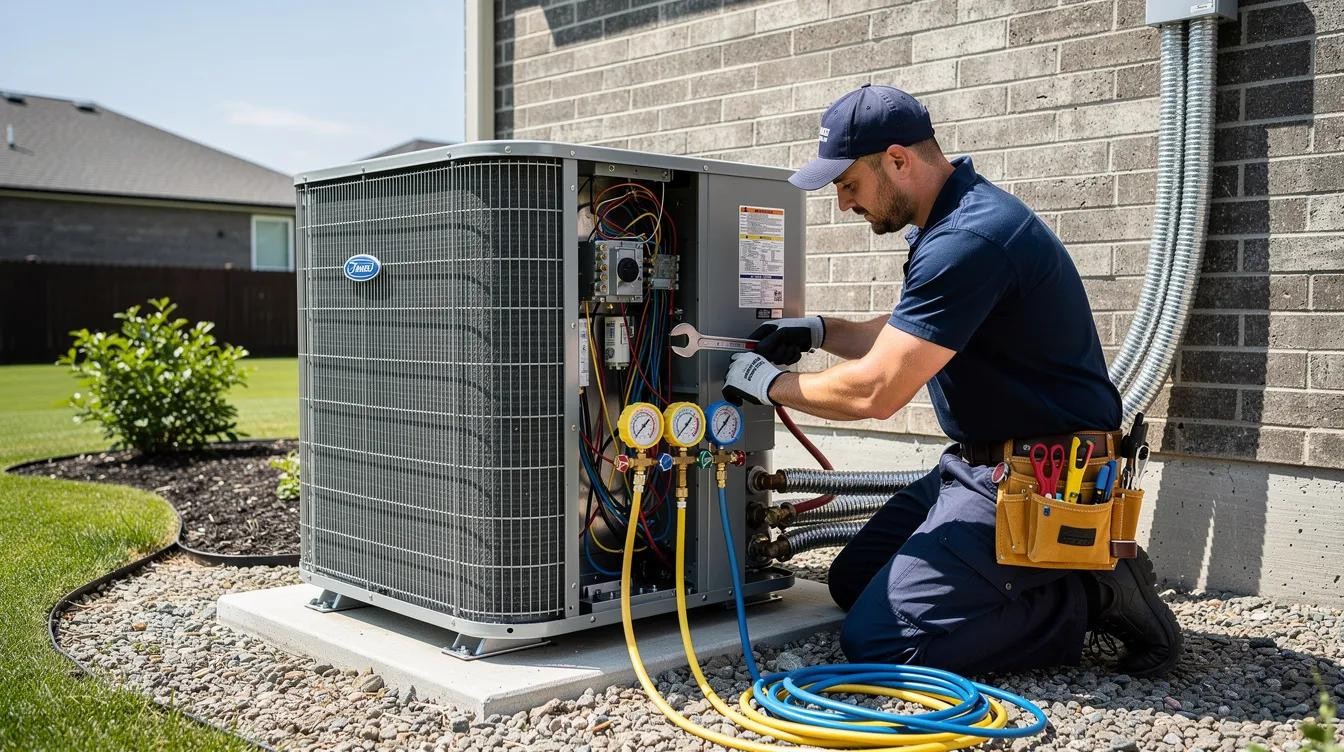
HVAC businesses often experience their busiest periods during extreme summer heat and winter cold. When temperatures rise or fall suddenly, customers need help with air conditioning failures, heating problems, maintenance appointments, and urgent service requests.
For HVAC contractors, this creates a major challenge: the phone may keep ringing while technicians are already working in the field and office staff are managing existing appointments.
A missed call can mean a missed service opportunity. Customers who cannot reach your business may contact another HVAC provider instead.
An AI receptionist can help HVAC companies manage incoming calls, collect customer information, qualify service requests, and support appointment scheduling without requiring someone to answer every call manually.
In this guide, we'll explore how HVAC businesses can manage peak-season call volume, improve customer communication, and use AI-powered phone answering to keep their operations organized.
Why Do HVAC Companies Receive More Calls During Peak Seasons?
HVAC call volume often increases when customers experience uncomfortable indoor temperatures or unexpected equipment problems.
Some common reasons include:
- Air conditioning breakdowns: Customers need help when cooling systems stop working during hot weather.
- Heating problems: Cold weather can increase enquiries about heating system failures and maintenance.
- Seasonal maintenance: Homeowners and commercial property managers schedule preventive inspections before extreme weather arrives.
- Installation enquiries: Customers may request estimates for new HVAC systems or equipment replacements.
- Service appointment requests: Existing and new customers call to check availability, request callbacks, or reschedule appointments.
During these periods, an HVAC company's office team may struggle to answer every incoming call while coordinating technicians and managing daily operations.
The challenge is not simply receiving more calls. It is making sure each caller receives a clear next step.
What Happens When HVAC Companies Miss Customer Calls?
Missed calls can affect both customer satisfaction and business opportunities.
Consider these common situations:
1. Customers Contact Another HVAC Company
When someone needs heating or cooling assistance, they may not have time to wait for a callback.
If your business does not answer, the customer might contact another provider who responds sooner.
2. Technicians Cannot Always Answer Their Phones
HVAC technicians spend much of their working day travelling between service locations, inspecting equipment, and completing installations.
Answering every incoming call while working is not always practical.
3. After-Hours Enquiries Go Unanswered
Customers may discover HVAC problems in the evening, overnight, or during weekends.
Without an after-hours call-handling process, these enquiries may remain unanswered until the next business day.
4. Office Staff Become Overloaded
During busy seasons, office employees may need to manage scheduling, customer questions, technician coordination, and incoming calls simultaneously.
This can create delays and make it harder to maintain consistent customer communication.
How Can an AI Receptionist Help HVAC Companies?
An AI receptionist answers incoming calls and handles routine customer conversations according to the business's configured instructions and workflows.
Instead of relying entirely on someone being available to answer the phone, HVAC businesses can use AI to manage initial customer interactions.
Here are some practical applications.
1. Answer Incoming Calls 24/7
An AI receptionist can answer incoming calls outside normal office hours and during busy working periods.
It can greet callers, understand why they are calling, answer approved business questions, and collect the information needed for the next step.
For example, a customer calling about an air conditioning problem can explain the issue and provide their contact details without waiting for an employee to become available.
2. Capture and Qualify HVAC Service Requests
An HVAC business needs more than just a customer's name and phone number.
A useful service request may include:
- Customer name
- Contact number
- Service address or location
- Type of HVAC equipment
- Description of the reported issue
- Preferred appointment time
- Urgency of the request
An AI receptionist can collect these details and organize the enquiry according to the company's configured workflow.
This gives office staff and technicians more context before following up.
3. Support Appointment Scheduling
Scheduling is one of the most repetitive tasks for HVAC office teams.
Customers may call to request maintenance visits, equipment inspections, installation consultations, or repair appointments.
An AI receptionist connected to a supported calendar can check availability, offer suitable appointment times, and create bookings according to configured scheduling rules.
This helps reduce unnecessary back-and-forth communication.
4. Handle After-Hours Enquiries
HVAC problems do not always occur during regular business hours.
An AI receptionist can answer calls during evenings, weekends, and holidays.
It can collect the caller's details, record the reported issue, and follow the business's configured callback, booking, or escalation process.
For urgent enquiries, the system can route selected calls to a designated human contact when the required transfer rules are configured.
Important: AI should not independently diagnose HVAC equipment failures or make safety-critical decisions. Urgent situations should follow the company's established safety and escalation procedures.
5. Manage Multiple Incoming Calls
During heatwaves or cold snaps, multiple customers may contact an HVAC company at approximately the same time.
Rexpt supports concurrent inbound calls, helping businesses handle multiple callers without relying on a single receptionist to answer each call.
Exact capacity depends on the configured plan and deployment.
AI Receptionist vs. Traditional Receptionist for HVAC Businesses
| Feature | Human Receptionist | AI Receptionist |
|---|---|---|
| Call answering | During assigned working hours | Can provide 24/7 coverage |
| Multiple callers | Depends on available staff | Supports concurrent calls |
| Appointment scheduling | Manual or through software | Can book through supported calendar workflows |
| After-hours coverage | Requires additional staffing | Available through configured AI workflows |
| Customer interaction | Human conversation | AI-powered voice conversation |
| Routine enquiries | Handled manually | Can answer approved FAQs |
| Complex situations | Human judgement | Can transfer or escalate according to configured rules |
For many HVAC businesses, these options do not have to be mutually exclusive.
An AI receptionist can handle routine enquiries and initial information collection while human employees focus on complex customer requests, technician coordination, and important decisions.
How Much Does an AI Receptionist Cost for an HVAC Business?
The cost depends on call volume, included minutes, integrations, support requirements, and the features a business needs.
For example, Rexpt's published SMB pricing includes the following options:
| Rexpt Plan | Published Monthly Price | Included Minutes |
|---|---|---|
| Starter | $119 monthly or $99 with annual billing | 300 |
| Scaler | $299 monthly or $249 with annual billing | 750 |
| Growth | $599 monthly or $499 with annual billing | 1,500 |
Rexpt also offers a trial option with 20 free calls and approximately 50 minutes, subject to the published trial terms.
These are general Rexpt plans, not HVAC-specific prices. Businesses should review the current pricing page and confirm which plan fits their expected call volume and integration requirements.
The right approach is to compare the subscription cost with the time spent handling routine calls, the number of enquiries received, and the potential value of service opportunities.
What Should HVAC Companies Look for in an AI Receptionist?
Before choosing an AI receptionist, HVAC business owners should evaluate the following features:
1. 24/7 Call Answering
Look for a solution that can answer calls outside regular business hours.
2. Lead Qualification
The system should collect relevant customer information and organize service enquiries.
3. Appointment Scheduling
Check whether it can connect with your existing calendar and follow your scheduling rules.
4. Call Routing and Human Escalation
Make sure urgent or complex enquiries can reach the appropriate person.
5. Call Records and Summaries
Call transcripts, recordings, and summaries can help teams review customer conversations and follow up with the right information.
6. Easy Setup and Integration
Choose a solution that fits your existing business processes without creating unnecessary technical complexity.
How Rexpt Helps HVAC Businesses Manage Incoming Calls
Rexpt is an AI receptionist platform designed to help businesses automate phone communication and manage customer enquiries.
For HVAC businesses, its capabilities can support several important parts of the customer communication process:
- 24/7 incoming call handling
- Service request intake and lead qualification
- Appointment scheduling through supported calendar integrations
- Natural voice conversations
- Concurrent inbound call handling
- Configurable call routing and human escalation
- Call history, recordings, and summaries
Rexpt also supports CRM and field-service integrations, with availability depending on the selected plan and configuration.
The objective is straightforward: help HVAC businesses respond to incoming enquiries while allowing their teams to focus on service delivery.
You can explore the dedicated Rexpt AI Receptionist for HVAC Companies page to learn more about its HVAC-specific workflows.
Final Thoughts
Peak-season demand can put considerable pressure on HVAC business operations. When technicians are busy and office staff are handling multiple responsibilities, answering every incoming call becomes difficult.
An AI receptionist can help manage routine phone interactions, collect service information, support appointment scheduling, and provide after-hours coverage.
The best solution is one that fits your business's call volume, scheduling process, and escalation requirements.
For HVAC companies looking to improve customer communication in 2026, AI-powered call handling can be a practical addition to an existing service workflow.
Frequently Asked Questions
What is an AI receptionist for an HVAC company?

An AI receptionist is a voice-powered system that answers customer calls, collects service information, responds to approved questions, and supports appointment scheduling. It helps HVAC businesses manage incoming enquiries without depending entirely on staff availability.
Can an AI receptionist answer HVAC calls after hours?

Yes. An AI receptionist can answer calls outside regular business hours, collect customer details, record service requests, and follow configured callback, booking, or escalation procedures.
Can an AI receptionist schedule HVAC service appointments?
Yes. When connected to a supported calendar, it can check available appointment slots, offer suitable times, and confirm bookings according to configured scheduling rules.
Can AI handle multiple HVAC customer calls simultaneously?
Yes. Rexpt supports concurrent inbound calls, allowing multiple customers to reach the AI receptionist at the same time. Actual capacity depends on the selected plan and configuration.
Can an AI receptionist identify emergency HVAC calls?
It can collect information about the reported issue and follow configured urgency and escalation rules. Businesses should define clear procedures for transferring urgent calls to qualified personnel.
How much does an AI receptionist cost for an HVAC company?
Costs depend on the provider, call volume, and required features. Rexpt's published Starter plan begins at $99 per month with annual billing or $119 with monthly billing. Higher-volume plans are also available.
Is an AI receptionist better than hiring a receptionist for an HVAC business?
An AI receptionist can provide continuous call coverage and automate routine enquiries. A human receptionist remains valuable for complex customer interactions and operational decisions. Many HVAC companies can benefit from combining both
On this page
- Why Do HVAC Companies Receive More Calls During Peak Seasons?
- What Happens When HVAC Companies Miss Customer Calls?
- How Can an AI Receptionist Help HVAC Companies?
- AI Receptionist vs. Traditional Receptionist for HVAC Businesses
- How Much Does an AI Receptionist Cost for an HVAC Business?
- What Should HVAC Companies Look for in an AI Receptionist?
- How Rexpt Helps HVAC Businesses Manage Incoming Calls
- Final Thoughts
- Frequently Asked Questions
Stop missing
customer calls.
Rexpt answers calls, qualifies leads, and books appointments 24/7.
Related Articles

How Electrical Contractors Can Handle Service Calls, Estimate Requests, and After-Hours Enquiries

HVAC Maintenance Agreement Calls: How to Handle Plan Questions, Renewals, and Tune-Up Bookings
Call Forwarding for Plumbing Businesses: How to Route Office, After-Hours, and Emergency Calls